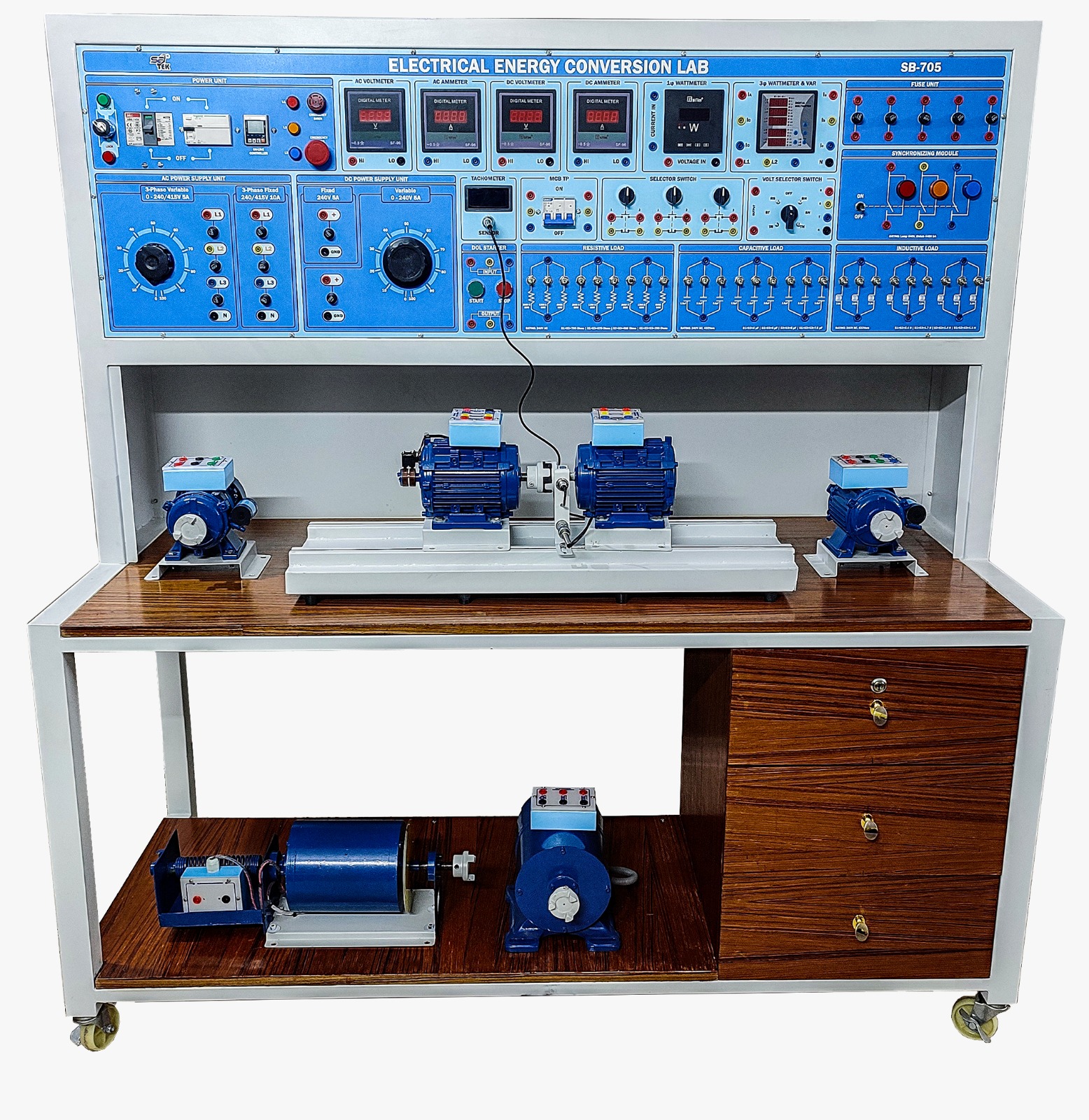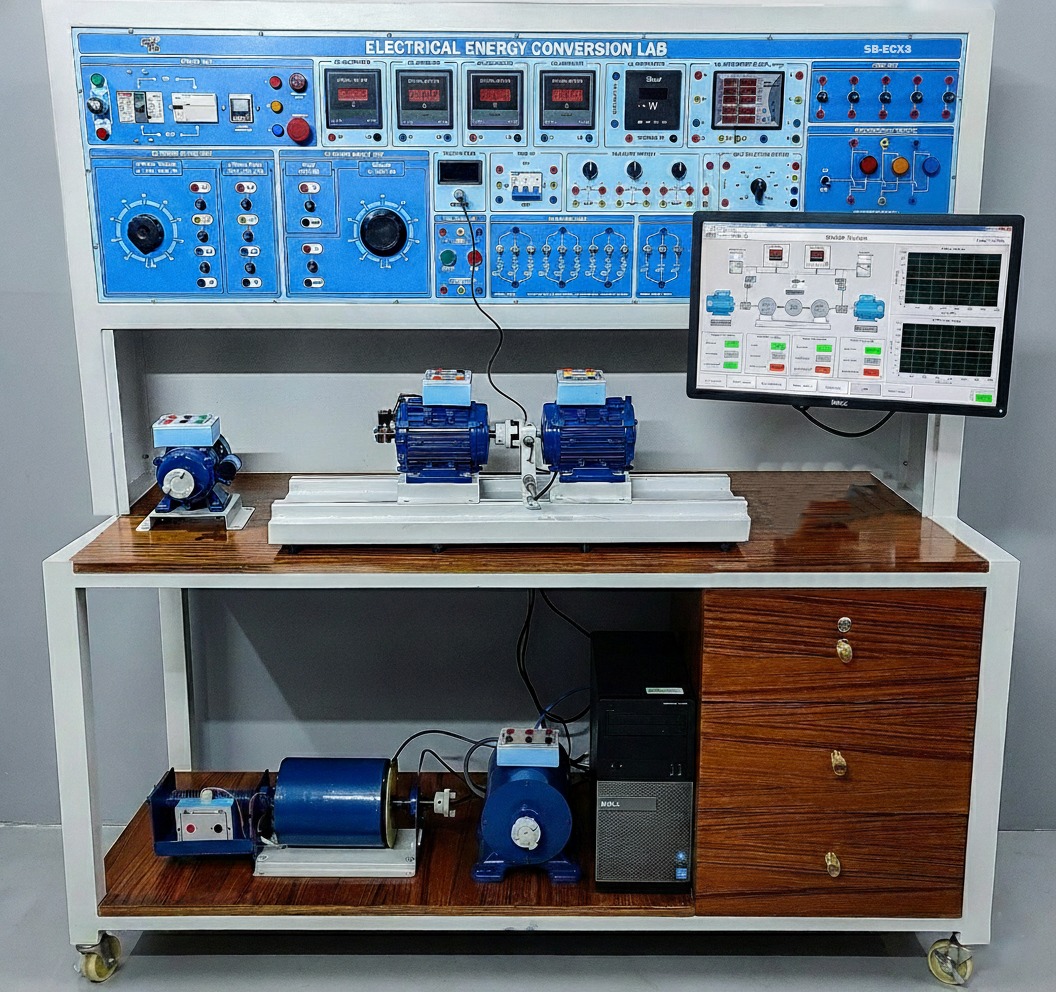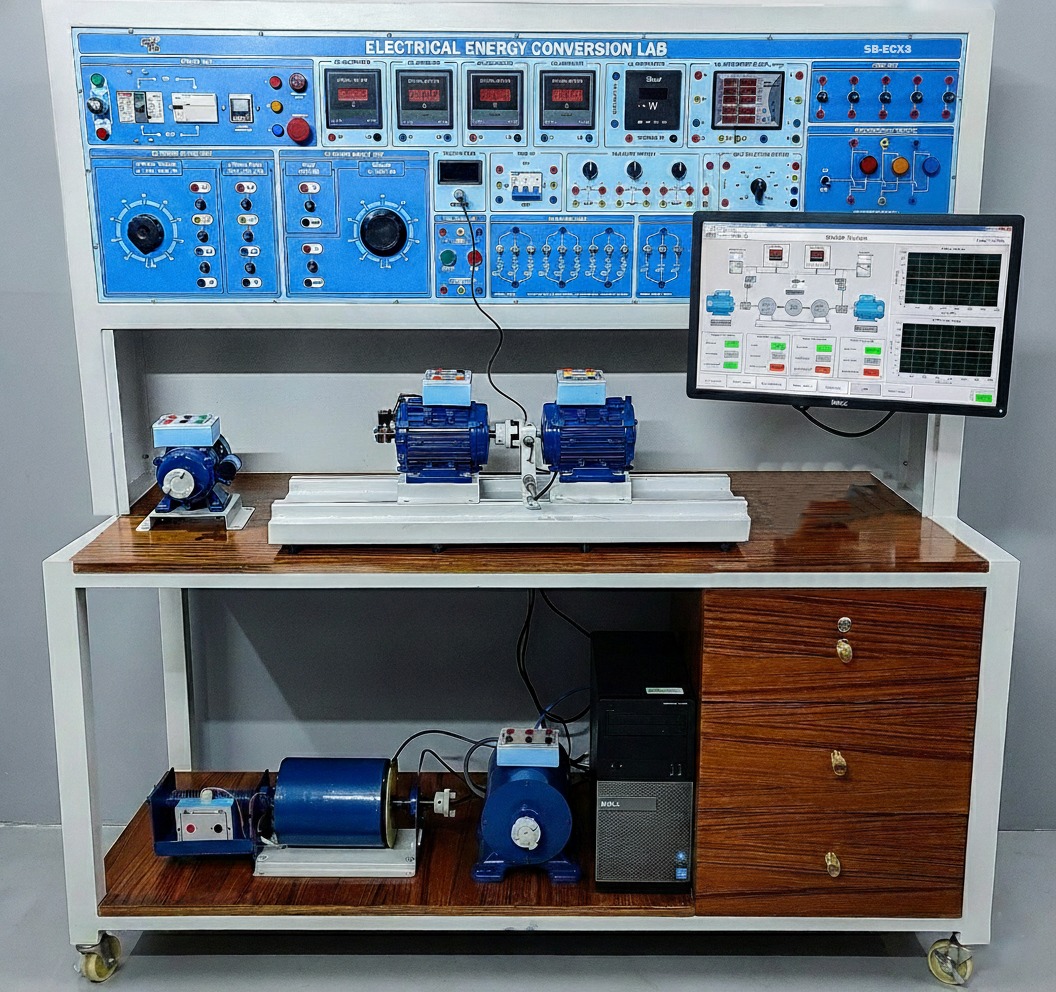
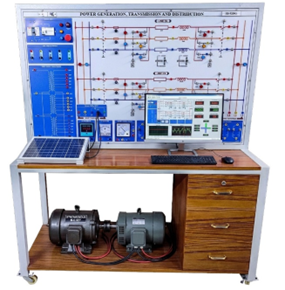
OVERVIEW: The Power Generation, Transmission and Distribution with SCADA Data Acquisition is a comprehensive, industrial-grade training and research platform designed to provide complete practical knowledge of modern power systems. This integrated laboratory solution covers conventional and renewable power generation, transmission line modeling, distribution systems with different types of loads, and advanced SCADA-based monitoring and control. Developed for engineering universities, polytechnic institutes, and power training centers, the system enables real-time data acquisition, fault simulation, protection analysis, renewable energy integration studies, and smart-grid monitoring. The platform bridges theoretical power system concepts with real industrial applications through digital visualization, analytics, and remote monitoring capabilities. Key Features Comprehensive Training covering power generation transmission, distribution, and SCADA integration. Real-time Monitori
TECHNICAL SPECIFICATIONS
Power Generation Modules
Conventional Power Generation
Generator Type: Synchronous generator.
Power Rating: 1kW to 2.2kW.
Voltage Output: 230 V AC.
Frequency: 50/60 Hz.
Prime Mover: Diesel or patrol engine.
Control Panel: Includes voltage, current, frequency, and power factor meters.
Renewable Power Generation
Solar Power Module
Solar Panels: Polycrystalline, 200W.
Inverter: Grid-tie, 1kW.
MPPT: Maximum Power Point Tracking. Battery Storage: 48V, 100Ah (optional).
Wind Power Module
Wind Turbine: Horizontal axis, 1kW.
Generator: Permanent magnet synchronous generator.
Charge Controller: 48V, 30A.
Inverter: Grid-tie, 1kW.
Transmission Module
Transmission Line Simulator: Adjustable length, up to 10km equivalent.
Voltage Levels: 11kV, 33kV, 66kV (simulated).
Line Parameters: Adjustable R, L, C parameters.
Fault Simulation: line-to-Neutral, line-to-ground faults.
Protection Devices: Circuit breakers, relays (overcurrent, distance, differential).
Distribution Module
Distribution Network Simulator:
Load Types: Resistive, inductive, capacitive, and mixed loads.
Voltage Levels: 230V, 400V (simulated).
Meters: Energy meters, power quality analyzers.
Protection Devices: Fuses, MCBs, RCDs.
SCADA Data Acquisition
SCADA Software
Platform: Windows.
Protocols Supported: Modbus, DNP3, IEC 61850.
Data Acquisition: Real-time monitoring and logging.
Control: Remote control of devices.
Visualization: Graphical user interface with dashboards, alarms, and trends.
Communication Interface
Wired: Ethernet, RS485.
Data Logger: Built-in or external, with storage capacity up to 32GB.
Accessories
Cables: Power cables, communication cables, and connectors.
Sensors: Voltage, current, temperature, and speed sensors.
Tools: Screwdrivers, wrenches, millimeters, and oscilloscopes.
Software CD/USB: SCADA software, drivers, and manuals.
User Manual: Detailed manual with instructions and experiments.
Advanced System Integration
Advanced Analytics: Integration with AI/ML for predictive maintenance.
Renewable Energy Mix: Hybrid systems with solar-wind combination.
Battery Management System (BMS): For advanced battery monitoring and control.
Remote Monitoring: Cloud-based SCADA for remote access and control.
Enhanced Protection Relays: Numerical relays with advanced protection features
SCADA DEVICE (DESKTOP COMPUTER):
Dedicated SCADA Workstation for DAS & Control:
Processor: Intel Core i5 11th gen or later
RAM: 16 GB DDR4-3200 (expandable to 64 GB)
Storage: 512 NVMe SSD
Software: (OS, SCADA software, database, logs)
Monitor: 22? Full HD IPS;
Communication System: USB, Serial (RS-232/RS-485), Ethernet (Modbus/IEC 61850 support).
UPS: 650VA, 20–30 min backup for safe SCADA shutdown.